move the wall instead
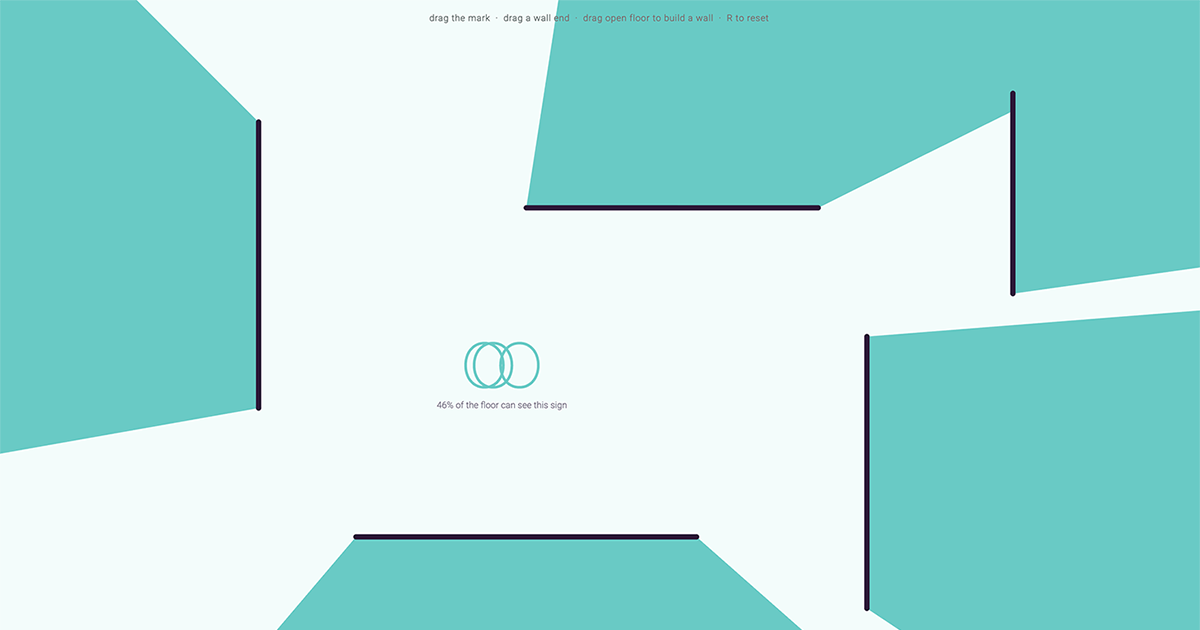
This is a room, seen from above. In the middle we’ve placed a sign, our mark.
The white area is everywhere the sign can be seen from. Step outside that shape and the sign is behind a wall. For you, it may as well not exist.
Then there is a number.
46% of the floor can see this sign.
Most people, given this, might start moving the sign to increase the percentage. It’s the obvious move; the sign is the thing that looks like the subject.
But how about moving a wall instead.
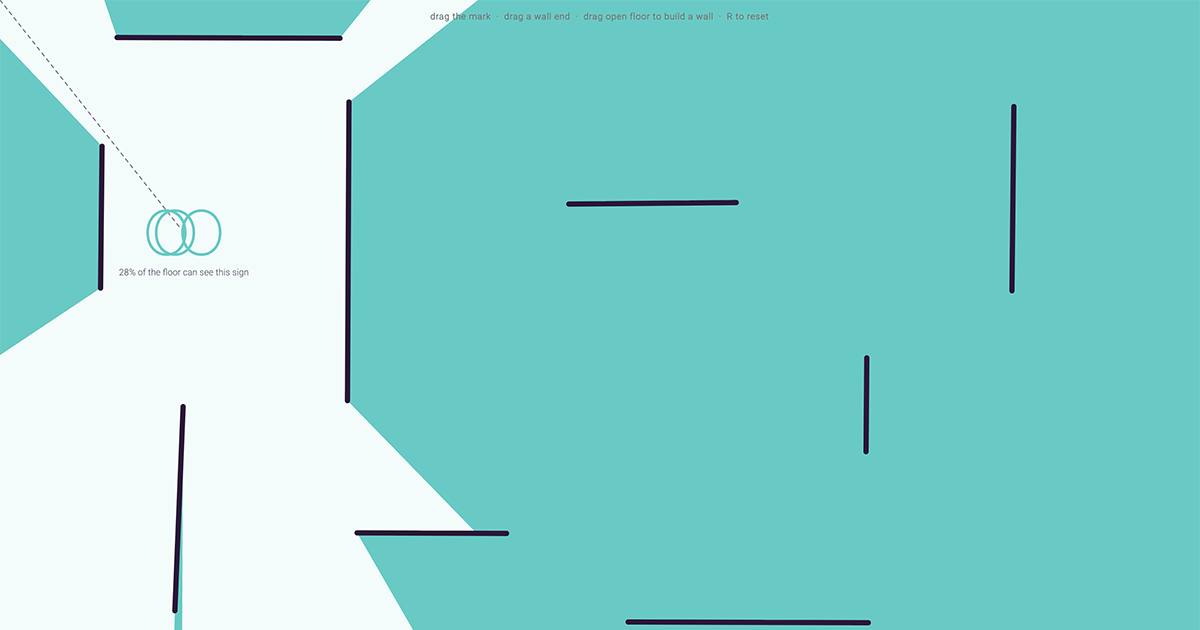
Move one wall and the shape does things that no amount of shuffling the sign could achieve. Open a corner and half the floor arrives at once. Close one and a whole wing goes dark, and no sign anywhere will ever reach it.
That is the real lesson in the toy, and it took us a while to notice it ourselves. The sign was never the powerful object in the room. The room was.
Here is the uncomfortable part. Every sign is an answer to a question the building or the space did not answer by itself. Sometimes that is unavoidable. But too often it is a patch, applied late in the process, over a plan that never explained itself in the first place.
A building can tell you where you are without a single word. Daylight at the end of a corridor pulls you toward it. A ceiling that lifts says something important is here. A change of floor material under your feet says you have crossed into somewhere else. A straight view through to the thing you are looking for does more than any arrow pointing at it.
None of that is signage. All of it is wayfinding.
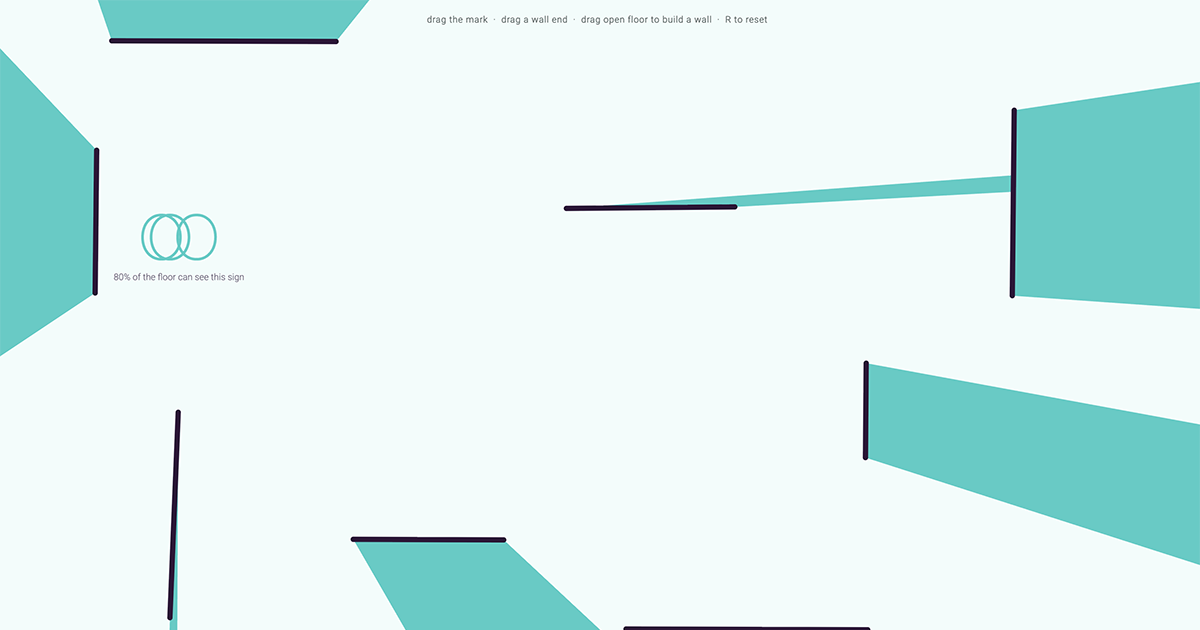
So the number is not really a score for the sign. It is a score for the plan.
A low number does not mean move the sign. It means this room is making people work, and somebody is about to be handed a sign to make up the difference.
Usually that somebody is us, and usually we are called once walls and boundaries are set. By then signage is the only instrument left, so signage is what we are asked for. We are good at it. We would rather have been in the conversation while the walls were still lines on a drawing, when moving one cost nothing but a decision.
Because the best outcome is not a cleverly placed sign. It is a building that needed fewer of them.
We built this as something to play with. It has turned into an actual tool.