The Tokyo Experiment
Slime Mold
There's an organism called Physarum polycephalum. It's slime mold. It's a single cell, it's yellow, it lives on rotting logs, and it has no brain. No eyes, no nerves, nothing to think with.
It can solve mazes.
In 2010, scientists laid out a map of Tokyo and its surrounding towns. Instead of drawing anything, they put an oat flake everywhere a town should be, slime mold loves oats. Then they put the mold in the middle and left it alone.
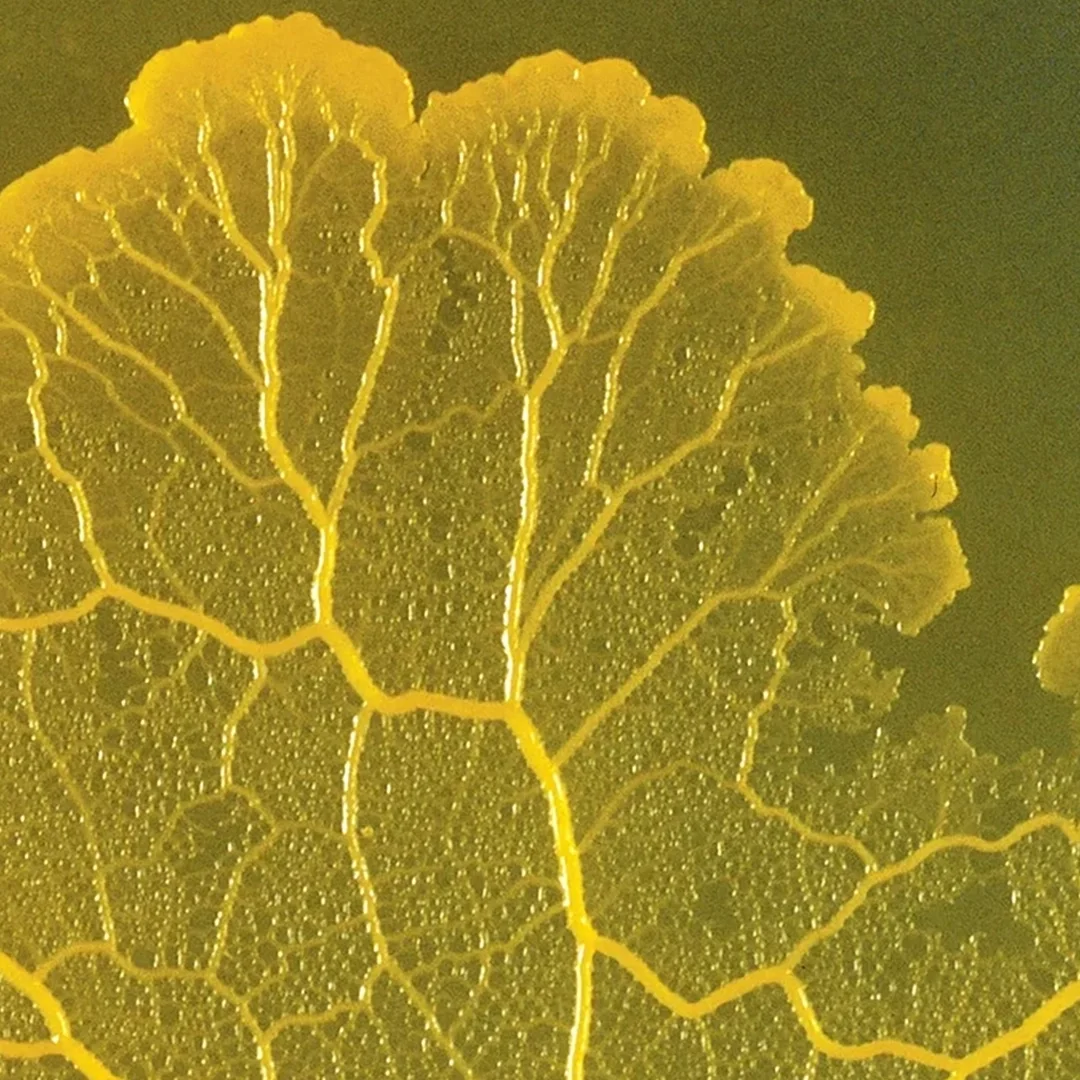
Physarum polycephalum.
Scott Camazine Science Source
It spread out in every direction at first, feeling around. When it found the oats, it began thinning out the routes that weren't useful and thickening the ones that were. After about a day it had built a network connecting every town.
Then they compared it to the real Tokyo rail system; designed over decades by engineers with surveys and budgets and committees. The two networks looked remarkably alike.
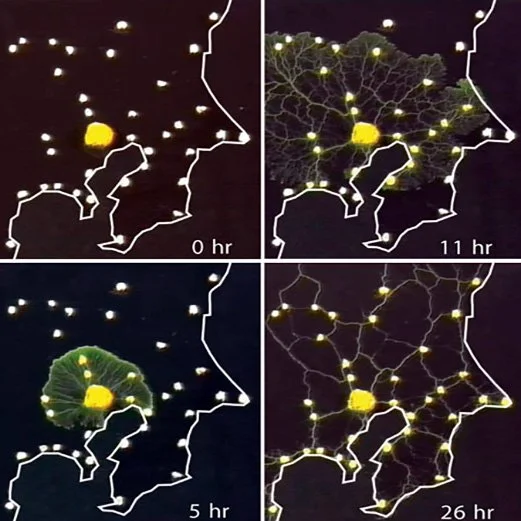
A slime mold maps out train routes around Tokyo. Science/AAAS
How it does it with no brain.
Every part of the mold follows one rule: sniff ahead, go where the smell is strongest, leave a trail as you go. That's the whole thing. A trail that gets used often gets reinforced. A trail nobody uses fades away.
We geek out over this stuff.
Wayfinding is about how people move through a place and how you help them get where they're going. The mold is doing exactly that, and it never draws a map. It just keeps reinforcing what works and letting go of what doesn't, until the routes that survive are the ones people actually need.
Oracol's line is clarity in complexity. This is that, running as a simulation: something clear and legible emerging out of something messy, with nobody in charge of the outcome.
Play!
click to drop food, and watch the network find it and rearrange itself. You're running the Tokyo experiment.