30 handshakes
Building connection, burning bridges, and six degrees of separation
What was the last genuinely beneficial connection that came your way? Perhaps a job, a project, a referral, or a person worth knowing? There is a good chance it did not come from your closest colleague or friend. In fact, many of the useful things that reached us here at Oracol this year did not come through people we know well or spend most of our time with.
Mark Granovetter noticed this in 1973. He asked people how they had found their jobs, expecting to hear about close friends, but in fact most of them named acquaintances they saw infrequently.
It’s not that your closest colleagues don’t care, but the circle is tight and you all know each other, they go where you go and read what you read, so by the time they hear something, the chance is that you’ve heard it too. However, the person you see less often, a random business acquaintance, a client, or someone you met at a meeting; they’re standing in a different circle of connections, and they are your door into it.
So while all Communities, family, social, professional, have critical social engagement value, communities that are connected through diverse influence, will tend to provide greater opportunity for growth, for connection.
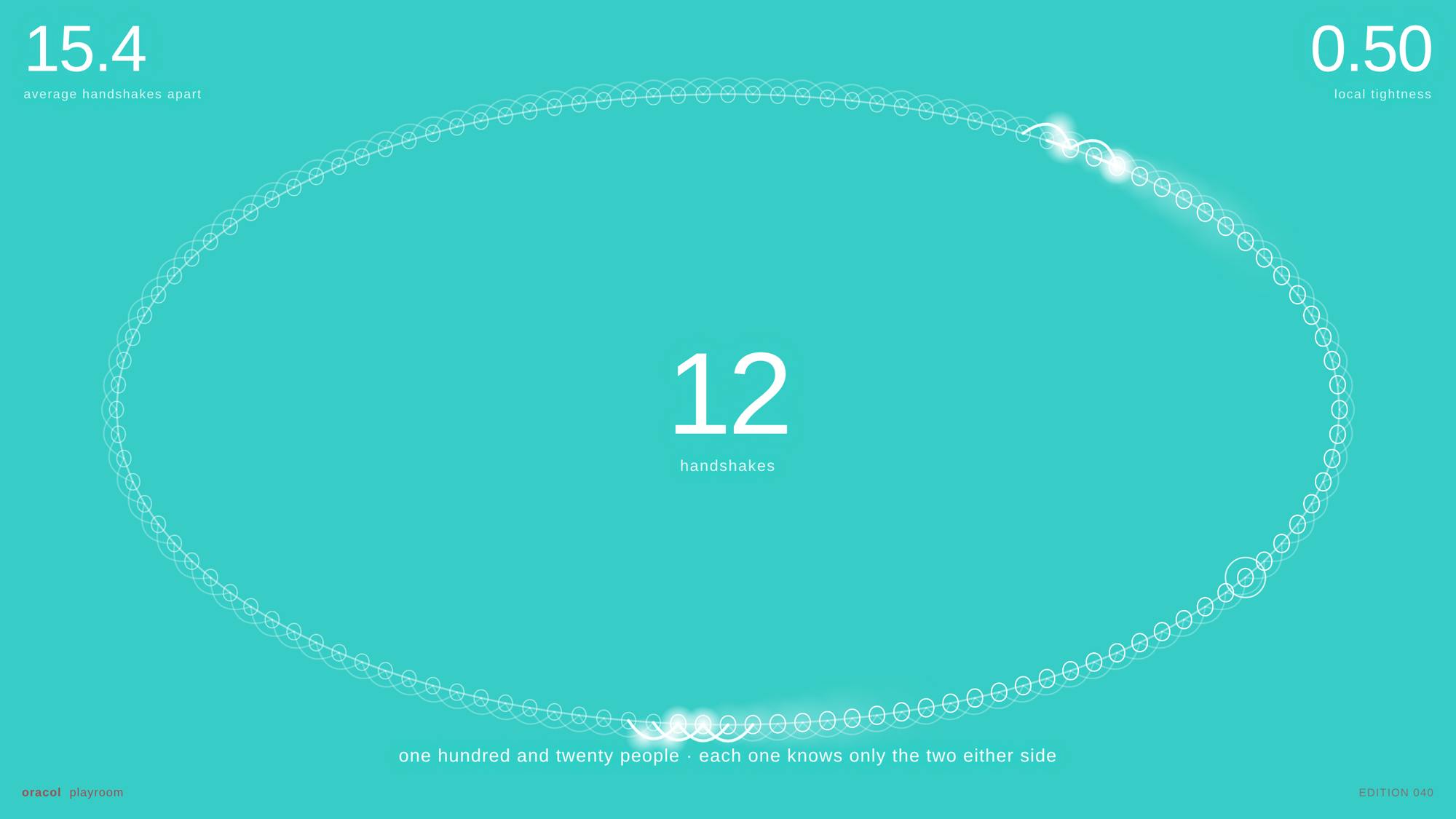
We developed Playroom 006 to visualize this idea
Imagine one hundred and twenty people standing in a ring, each knowing only the two on either side. It is the warmest community you could draw, and the slowest, a message handed person to person needs thirty handshakes to get all the way round.
Now build three bridges or connections straight across the middle, to people you may not know, and the average number of handshakes to make a full circle falls from 15.4 handshakes to 9.0. The local tightly knit circles however, barely change, from 0.50 to 0.49.
That was Duncan Watts and Steven Strogatz’s finding in 1998. And the interesting point here is that you do not have to trade closeness for reach. A few long connections enable a huge increase in speed to complete the circular connection, but cost the local circles almost nothing.
The game Six Degrees of Separation (using our beloved Kevin Bacon as the main connection point) is based on this exact strategy.
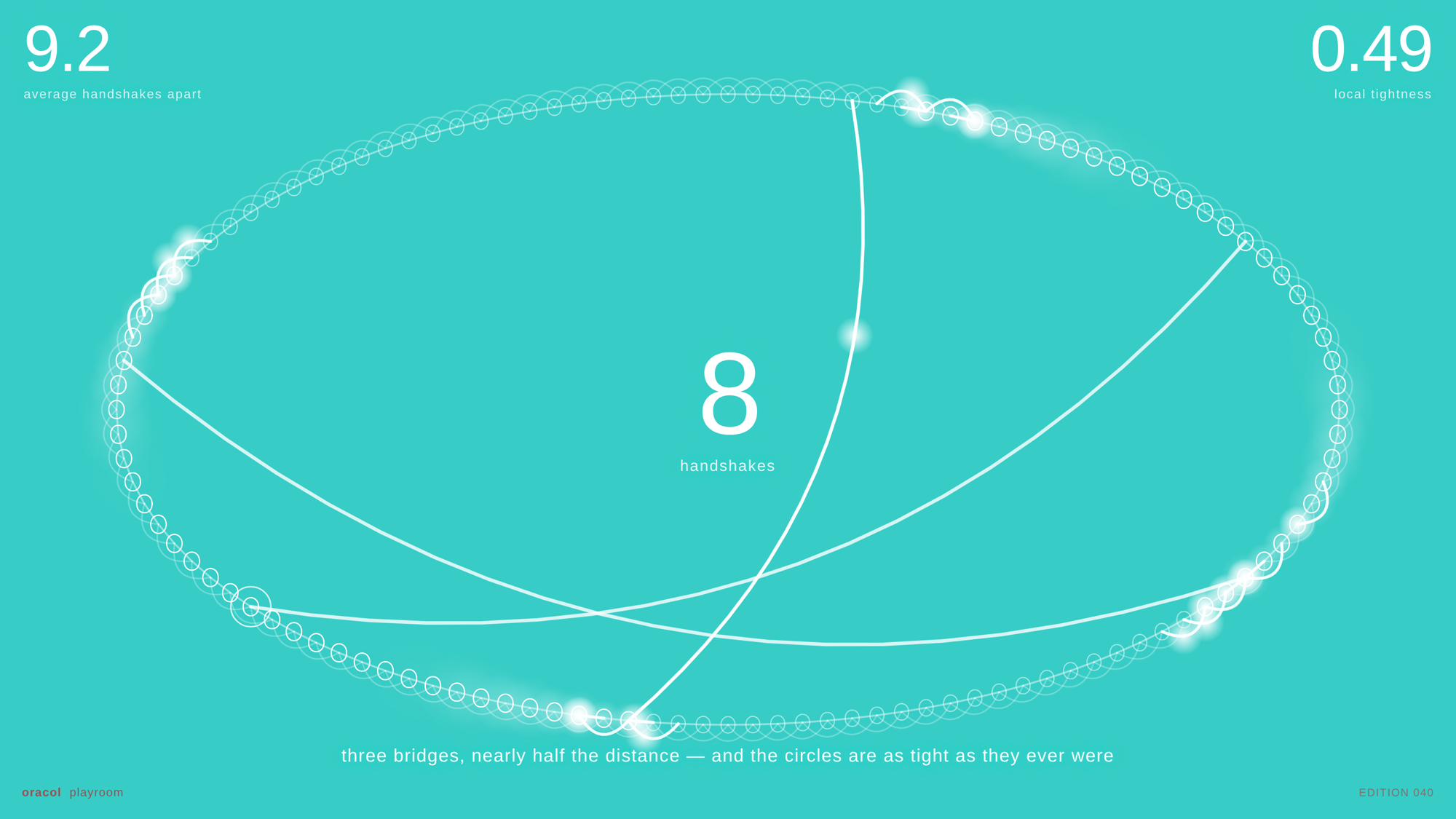
Now burn a bridge. Cut one of those connections and the room stretches straight back open. Cut a tie between two neighbors and nothing happens at all, because there were always other ways round.
Granovetter’s point was never that weak ties are nice to have. It was that they carry the load.
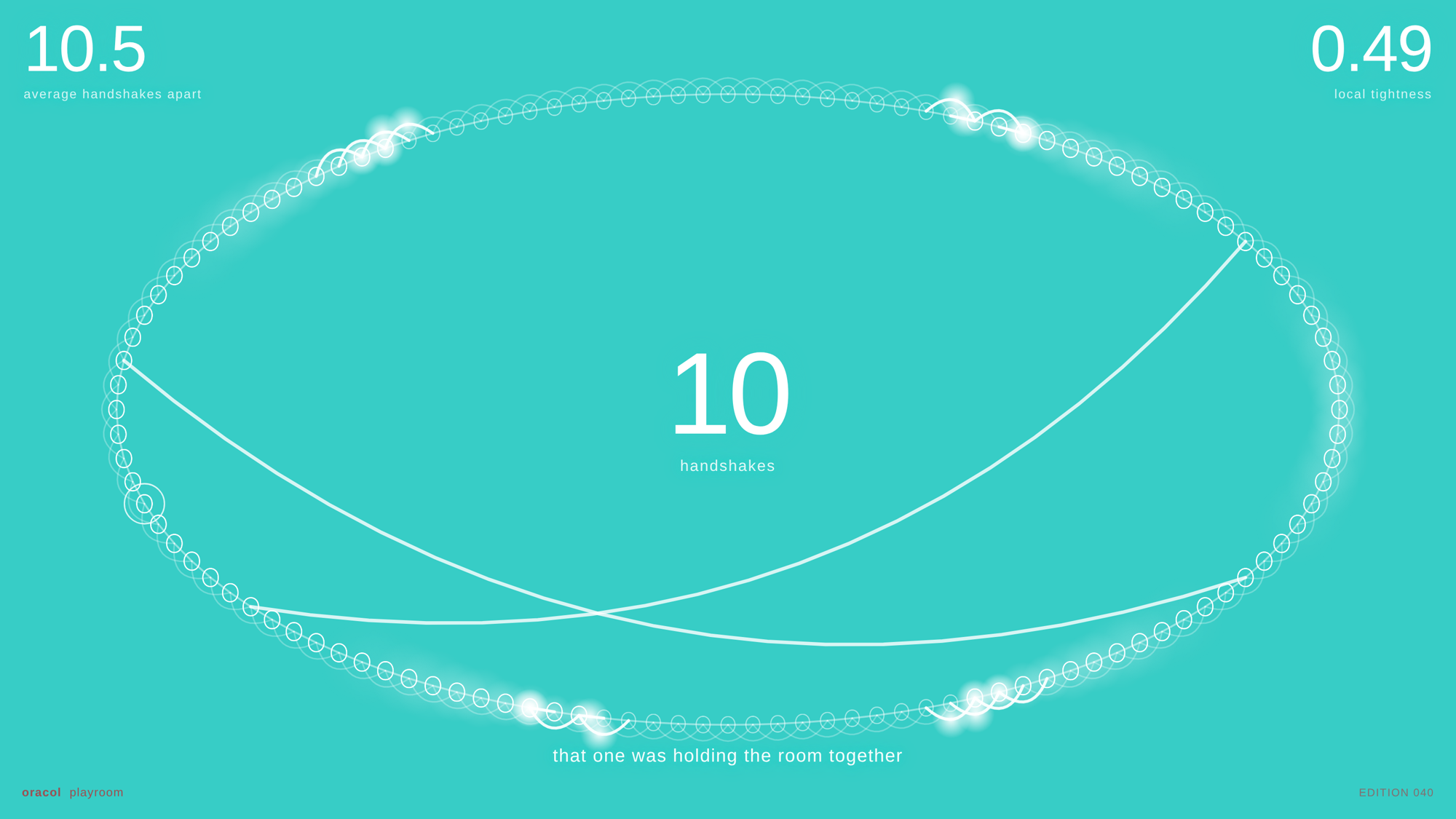
We built this because it is an ideology that we’re fully invested in. Our own business depends on it, and it’s how we engage with our collaborators and our clients. Our connections and our communities are our professional life-line, and they're the reason we are able to do what we do.
The easy move for a young practice is to work the circle we already have, perhaps other designers and professionals who go to the same events and chase the same projects. That circle is familiar and comforting, but it’s much less likely a source of anything new because everyone in it already knows what we know.
The real opportunities tend to arrive from elsewhere. So we need to build bridges across the circle and into less familiar places and with less familiar people, different areas of specialization or other parts of business practice for example.
Because everybody knows somebody. So go build some bridges, and shake some hands!
Tinker with it at playroom.oracol.co